What a Facebook Break looks like—and it’s not what you would expect…

About a month ago, I felt like screens were overtaking my life. I had just come off of a wonderfully relaxing vacation, and as I thought about the prospect of going back to my usual routine, I felt convicted. My greatest concern was that I just spent too much time in front of screens and not enough time to reflect, read, and pray.

So what did I do? I got off Facebook, Instagram, and Twitter. I removed them from my phone and even deactivated Facebook for a short while (it’s back but I still don’t use it). My social media usage dropped dramatically and I had an opportunity to be free from my device. Or so I thought.

One key learning about my social media break is that my screentime didn’t drop. Why? Because Facebook isn’t the problem. Nor is any other social media. My time on social media was replaced with other screen time such as YouTube, which is, arguably, another form of social media.

So what was and is the problem? I’m the problem. My sinful, deceiving heart is the problem. It’s a Romans 7 issue, where I do the things I shouldn’t and don’t do the things I should. My time to reflect, read, and pray more is not because of Facebook, TV, or any other distraction. Those are symptoms, outcomes of my heart. Instead, my lack of time with God is because of my undisciplined, misaligned heart.

By removing myself from social media, I missed out on some things. Connecting with people I love who wished me a happy birthday last month. Being active with our church’s Facebook page. Being a part of someone’s life and encouraging them with comments and likes. These are the positives of social media. And sure, there are negatives, but with a healthy approach, social media can be a good thing. Just not all of the time.

So what now? I’m hoping that this experience can be a help to others. My hope is that I don’t develop a sense of legalism, but structure with room for the Spirit to lead me daily. That said, plan going forward is this:

  • Return to social media, but keep the apps off of my phone to avoid disctractions.
  • Schedule a time and a place a few times a week for prayer and deep reflection with the Lord, beyond my normal devotion time.
  • Set goals for reading, visiting others, and other onscreen activities each week.
  • Reassess my priorities at least every month, if not every quarter.

That’s it. That’s where I’m at. And again, I hope that this experience is helpful to you. If you’ve got your own thoughts, I’d love to hear it. Blessings to you on your journey in Christ.

In Him,

Pastor Fran

Conquering the spirit

Proverbs 16:32 ESV‬ [32] Whoever is slow to anger is better than the mighty, and he who rules his spirit than he who takes a city.

There are many conquerors of cities, states, and nations, but it is a rare few who can conquer the heart. The best of men are men at best, and even the greatest of kings were deeply, tragically flawed. The world is never enough, and the temporal things of this planet never satisfy for long. And when men pursue nothing but the temporary, they will leave this world empty, lost, and miserable.

This is why this proverb is so fitting. The world can see and count successes and failures, measured by their own standard. Yet God looks at the heart, and what might appear weak to the natural spirit is first in the Kingdom.

So how do your conquer your lawless spirit? It might seem easy to say that it’s about discipline. Yet self-control is impossible if not for God’s sanctifying work. In fact, self-control is the last fruit of the Spirit, a life long effort of focus, submission, and finally, surrender. Your spirit must submit to the Spirit.

Our loss of self-control is directly tied to our distance from God. When we draw hear to Him, He brings us close, but when we shut our eyes and ears to His workings, He keeps us at a distance, free to be disciplined by the fallen world, pressed until we return to His goodness, grace, and mercy.

You are more than a conqueror, turn to the Master of Your soul. Draw close to Him as you let go of the things of this world. Let God do His work as You seek first His Kingdom.

In Him,

Pastor Fran

Need to make a Decision? Wait.

It’s so easy to choose the easy way.

We live in a world of choices, and often, we want to take the most reasonable one, a way that causes the least amount of pain, a way that brings comfort, prosperity, and even a feeling of peace for the moment.

Yet this temptation is deceiving, the pleasure temporary. We shouldn’t envy the world or the men who are taken by the world’s definition of success, and we certainly shouldn’t emulate them as believers. In fact, the very definition of success within the Kingdom is different, and proclaims a better way:

‭‭‭‭‭‭‭Proverbs‬ ‭3:31‭-‬32‬ ‭ESV‬‬, “Do not envy a man of violence and do not choose any of his ways, for the devious person is an abomination to the Lord, but the upright are in his confidence.

Man’s ways may seem right, but God’s ways are well above them. When we prioritize listening to God, we will see His righteousness reign in and through us. God the Spirit leads, His wisdom guides, and His uprightness becomes our confidence as He leads us to choose His way, even when our smallest decisions seem mundane or meaningless. Choices matter, and our micro actions match our priorities as deceit is cast aside, violence is abhorrent, and holiness is upheld. And yes, God is glorified.

So do you need to make a decision? Get in His Word, pray for guidance, and seek godly counsel. Look at each choice, not from a human-centered, cerebral and emotional standpoint, but from God’s perspective. Be deliberate, not hurried when thinking about what to do.

And especially keep in mind that when you are tempted to drift and take another way, He often calls you to the road less traveled instead, a way that advances the gospel way of life.

Praying for you,

Pastor Fran

Men without Chests

‭‭1 Corinthians‬ ‭16:13‬ ‭ESV‬‬, “Be watchful, stand firm in the faith, act like men, be strong.”

C.S. Lewis wrote that we are stuck in a tragi-comedy, a world where morals and virtue are not taught but expected, where ethics are relative to the eye of the beholder. What was true in his day is even more true today.

He wrote:

In a sort of ghastly simplicity we remove the organ and demand the function. We make men without chests and expect of them virtue and enterprise. We laugh at honour and are shocked to find traitors in our midst. We castrate and bid the geldings be fruitful. —Lewis, The Abolition of Man, pp. 35-37.

Our world is in need of men. Real men. Men who know the Word and step out to change the world. Men who stand for life, for their families, who think not about themselves but the ones they are called to care for. Men who are men indeed, who lead with love and love those they lead. Men with chests.

This is where the church needs to step up. Men who are being discipled to disciple others. Men who are developed, who serve Jesus well, who stand for truth and express love in a balance that is seen in Jesus. Men who become our pastors, deacons, husband’s, and fathers. Men who change lives.

This is the cornerstone of our ministry at Beacon. We have opportunities to grow, to study in the Word personally and collectively. We have shifted to be all about making disciples of men and of women and to be a light to the community around us. As we grow more, we serve more, reach more, and teach more. We can change the world when we do this faithfully and with patience.

I’m excited to be at Beacon Church, yet we’re only getting started. Pray for us as we seek to make men with chests who live and love unselfishly, as we reach Cincinnati and beyond with the gospel.

—Pastor Fran

3 questions to ask for your next Ministry

No matter what you do, any profession is something that God can use for His Kingdom. We are all ministers. All of us are called to something for some greater purpose in Christ (see Ephesians 2:10).

For me, to borrow a term that one of my former colleagues just used, right now, I am a free agent. Because of the revenue impact of the COVID-19 closings, my organization had to eliminate a significant number of positions, including my entire ministry team. No one did anything wrong, nor did I leave on bad terms. But the truth remains that like some of you, I am prayerfully seeking God’s next assignment.

During a time like this, it’s perfectly normal to do some soul-searching, trying to get guidance on what to do next. For me, I have chosen to look at my own life, aspects of my personality, and remembering the times that I had the most joy while I served Jesus. My process has been to ask myself three basic questions. And while none of these questions are earth-shattering or overly creative, they are still helpful:

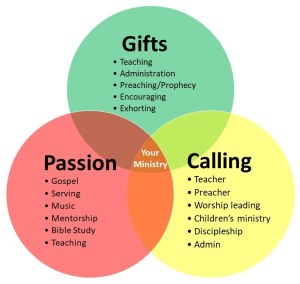
1. What is my passion?
2. What are my gifts?
3. What is my calling?

First, what is my passion? I believe that a person’s passion is God-given. These are the things that cut the heart, that stir up excitement, that keep you up at night (in a good way). When I served in my last ministry, I would wake up at 5 am or sooner WITH NO ALARM CLOCK just to get into the office and get started. That’s an example of the type of passion for doing what you are supposed to do!

What are my gifts? When a person comes to Christ, God the Holy Spirit provides gifts to a believer to build up and multiple the church. I have gifts, you have gifts, but none of us have the same gift. It’s different for each person. The key is finding out which gifts you have and use them in the work of ministry.

What is my calling? We all have a calling from God. Christ has given us the general call, to make disciples of people (Mt 28:19), but how we exercise this can be different. And God will take that calling, use your gifts and passion, and guide you to the ministry that He has placed before you. This ministry can be across the street or across the world, but it is a ministry nonetheless.

Here’s a general example of what this looks like (I just used some terms at random as possible examples):

My encouragement: ask and answer these three questions prayerfully, carefully, and spend time with a trusted, godly counsel talking about them. When you do, I am confident that you will have a better direction for your sweet spot, allowing you a new freedom to serve with joy for Jesus.

For me, this process has helped me to better hone in on my next steps. It’s good for me, but also good for the next ministry that God leads me to be a part of. And this is the key: to follow God’s leading to a place in order to serve Him joyfully, effectively, and faithfully, all so He can be magnified through me.

Fran

7 Reasons Why You Need a Pathway for Discipleship

Although some churches do a wonderful job of discipling, I continue to be amazed at the number of churches that have no pathway for growth for their members to follow. Yet, we all know that spiritual growth is essential! And while we know that growth is a work of the Spirit, it is also healthy to have a plan to follow as you let Him do His work in you. I’ll share another time on how you can set this up, but for now, here are 7 reasons why you need a pathway for discipleship, both individually and collectively as a church:

  1. You are tempted to sin. Sin has been here for a long time, and temptation is not going to stop.
  2. You need a far off view. A big picture view is an important part of objectively tracking areas where you are growing and where you need to grow in.
  3. You are tempted to be passive. There are more tools for spiritual development than ever before, but there is a great irony that biblical illiteracy is so high. It is very easy for you to sit back and not get intentional with your spiritual growth.
  4. Accountability is needed. The rugged individualism of the American culture tends to shy away from accountability, but there are many passages in Scripture that call us to submitting to each other in Christ.
  5. You can avoid an unbalanced diet. Having a strategy for study will help you develop a healthy, balanced diet for discipleship and avoid doctrinal “hobby horses.”
  6. You’ll study topics and books that you might not normally study. It’s natural that we tend to avoid the areas we are unfamiliar with, but a properly implemented pathway will stretch you a bit.
  7. You can be humbled and challenged. You might see growth in some areas and a lack of growth in other areas of your life. This is a great opportunity for you to be further challenged!

Hope this helps. Next time, I will write on the “how” of creating a discipleship pathway.

Fran

4 Lifehacks to Form Good Habits

I never got it. I tried and tried and tried to learn how to juggle, but I. Just. Couldn’t. Do. It. photo-1502144696405-e84600828d73

For those of you who are able to do it, well good for you. But me, I just can’t seem to juggle anything- whether handkerchiefs, pins, or (gulp!) swords.  I’m told that to juggle, that it’s all about muscle control and concentration. Easier said than done, I guess.

I write this because there’s a spiritual application here. For example, I think that we all want to be healthy, effective, and God-glorifying in our lives. And to do that, we need to develop godly habits to help us to grow and stretch in our walk in Christ. Yet, I know, sometimes it’s like juggling, or spinning plates, or herding cats. It’s just hard.

But it’s not impossible. This is the time of year when New Year resolutions (remember those?) have long since been gone and guilt or denial has set in because we often missed the mark. It might have been goals spiritually, physically, socially, or something else, but it didn’t happen.

Now, I’m not writing this as a guilt trip but as an encouragement. You see, large goals cannot be done unless small, short term changes are made. I would even submit that this begins with your relationship with God, that it is to be growing and flourishing. Therefore, your time with God comes first, then the other areas can follow. When we are thankful for Christ and His goodness, then other things help work together as a way to worship him. Paul the Apostle wrote, for example, “Give thanks in all circumstances; for this is the will of God in Christ Jesus for you” (1 Thess 5:18).

So be thankful, and as you approach life with that in mind, consider these four lifehacks you might want to use to form good habits on a daily basis:

  1. Start with a quiet time. I know that this is difficult to maintain for some, but this is an essential to your day. There are some great resources available to you from LifeWay where you can go deep in your study. I even recommend using electronic resources such as the YouVersion Bible app, where you and a group of friends can go through short devotions together.
  2. Schedule exercise and log food. Your physical health is key to a happier, effective day. Put exercise in your calendar and stick to it, and log your meals on an app like Noom, MyFitnessPal, or another program. And by the way, some exercise (even 15-20 minutes) is better than no exercise.
  3. Keep track of your spending. Yep. That discipline is also important. I live by the 80-10-10 rule. I save 10 percent, give 10 percent (or more), and live on the 80 percent. I use apps to help me keep track of my spending and I try to watch where I am on an ongoing basis.
  4. Reevaluate your long term goals. You need to have goals in your life to remain on task. Whatever your goals are, write them down and revisit them every month on the same day. It’s a good thing to check your progress that your short term habits are going in the direction you want to go.

Most of all, have fun. Fun should come in whatever you do. When you have fun, you’ll be more relaxed, effective, and God glorifying. It doesn’t have to be a stressful set of tasks and it’s not impossible (like juggling is to me!). Try these and see what they can do for you. And if you have any other ideas, share them here.

In Christ,

Fran

The Breakfast of Champions

I had a friend who loved to say years ago that “feedback is the breakfast of champions.” He was and is right- but to get good feedback is to become very, very vulnerable. In fact, it takes a good deal of humility to receive honest critiques of the state of things all around you, even about you. It’s common and natural, in fact, to be defensive when hearing some things that might even be less than desirable. This is because pride, ego, and even fear keeps us from hearing the sometimes painful truth. We shut it down because we don’t want to be brought down. 

However, Dr. Eric Geiger put it well when he wrote,

“Feedback fuels your leadership development. It helps you adjust what needs to be adjusted, builds confidence, and confirms areas of strength. Without feedback, your growth as a leader is stunted” (https://ericgeiger.com/2017/04/take-responsibility-for-your-own-feedback/).

baseball

Basically put, you need feedback, and in fact, this only makes you better. Take one example from a sport that I love, baseball. A pitcher cannot possibly develop by only relying on his raw talent. He must be coached, analyzed, pushed, guided, and pushed even more. Those who respond to critiques from pitching coaches and more experienced players have a better chance of success. The best pitchers are the best listeners. Good feedback is how champions are built. 

Paul wrote in 1 Cor 9:24“Don’t you know that the runners in a stadium all race, but only one receives the prize? Run in such a way to win the prize” (CSB). Strive to be better, run the race with all you got, and keep your eyes on Jesus. If it’s all about Him, then feedback from someone you trust only makes you better for an eternal purpose.

Until He comes,

Fran

Five Simple Tools For Planning Disciple Making in Your Church

I spend a lot of time talking and interacting with pastors. One of the most common issues that I run into is that pastors often are so busy with so many things, they often overlook one of the most important and fundamental aspects of what they do: making disciples of all people. I get it. There’s a ton of things to do on the front burner, and planning a comprehensive discipleship process takes time, work, and energy. However, there’s no more important thing a Church leader could do than to establish a strategy disciple making. I’m always available to visit Church in the Midwest, but here’s some great tools from LifeWay that can be useful for you as you plan your discipleship strategy for the fall and beyond:

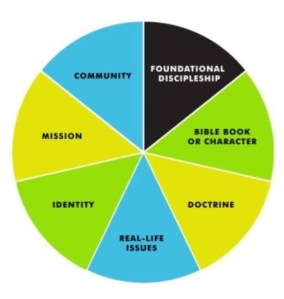
  1. maxresdefaultThe Balanced Discipleship Wheel: this is a free tool that can help make sure that you are covering a wide variety of discipleship studies during the course of a year. Just click on one part of the wheel and it will take you to some of the studies that might be of interest. Best of all, it’s free!  www.lifeway.com/balanceddiscipleship
  2. Gospel Foundations: this brand new study is a foundational one year chronological exploration of the Bible for all ages. It comes with short, five to eight minute videos and is perfect for small groups or any other setting. It has 42 sessions during the course of the year to allow for off days and fellowship days. Released June 2018.  www.lifeway.com/GospelFoundations
  3. Disciples Path The Journey: ever want to take a new believer through the basics of the Christian faith, help train them in the essential doctrines, and then help them to become a fruit bearing disciple of Christ? Of course you have! This resource is designed to take a believer or a small group of believers on a journey through what it means to follow Jesus in a significant way. They’ll learn about the essentials, go through some doctrines found in Scripture, and then study about what it means to be on Mission. It’s a very inexpensive resource that could be used in a variety of settings. Here’s the link: https://www.lifeway.com/en/product-family/disciples-path/the-journey
  4. MinistryGrid.com: newly redesigned, this video training tool is for anyone who serves in a church. There are excellent courses designed for teachers, deacons, team leaders, greeters and more! There are plenty of free videos, including the training video on each week Sunday school lesson. Best of all, it’s mobile-friendly! If you are not using Ministry Grid, you’re missing out on a really good tool for your church. www.ministrygrid.com
  5. Smallgroup.com: ever wanted to study a particular text of Scripture or a topic for your small group? Then smallgroup.com is perfect for you! You can type in a text or a topic and one or more customizable Bible studies will show. The studies will include some exposition as well as a full teaching plan. Some of the studies even have video. This is not a “push play” shallow type bible study, but is a full study by a trusted resource that can take small groups to a new level of customization. It’s also perfect for churches that want to do a church-wide campaign on a particular  topic or text. There’s a free trial with it and the cost is very inexpensive on a monthly basis. www.smallgroup.com

Hope this is helpful. Again, if you live in the Midwest and want me to help consult with you on developing A discipleship strategy for your church, just let me know. I’m here to serve the church in her mission of making disciples!

Fran

3 Principles Learned from Nehemiah Today

I love the book of Nehemiah, not just for the leadership applications, but also for the chance to see how transforming God is in almost impossible situations.

During one of my devotions, I came across Nehemiah chapters 9 and 10 and saw some really spectacular things. In it, the people of God had been convicted about the fact that they had not walked according to the Word of God. They repented, and in so doing they emphatically proclaimed a change of heart:

“Those of Israelite descent separated themselves from all foreigners, and they stood and confessed their sins and the iniquities of their fathers. While they stood in their places, they read from the book of the law of the Lord their God for a fourth of the day and spent another fourth of the day in confession and worship of the Lord their God” (Neh 9:2-3).

kyle-johnson-417625-unsplash

Basically put, their repentance was passionate, persistent, and on point. So what did Nehemiah have them do next? He made them write it down. They solidified their heart with their head and hands here. Here are some of the things that they agreed to:

  • Not to marry outside of Israel.
  • Not to do business on the Sabbath, even with outsiders.
  • Support the Levites.
  • Support the Temple sacrifices.
  • Give to the work of the Lord.

This is some amazing steps! Of course, we know that the people miss the mark on keeping their obligations, and some eventually get to the point of avid legalism. However, this is without a doubt a turning point for Israel.

So what can we learn from this? I see three things that we don’t want to miss:

  1. In God, your past has passed. While there is often the temptation to dwell in the past and stay focused on the sins which entangled you, the truth is that God is a forgiving, compassionate God. When you truly come to repentance, He has promised to forgive and cleanse, and never to leave nor forsake you.
  2. In God, your present can be a time of worship. Every moment with God is a moment that you can spend in worship to Him. Your new life in Him needs to start and end with an intimacy because of who He is as the amazing, wonderful Savior. Don’t forget that He is with you, even now.
  3. In God, your future is written. He has always known your tendencies, your motives, and your heart. God is the God of second chances, and He is the God who has planned your future. Be in prayer to see how He has impressed your heart, follow His leading, and enjoy a life in Him.

Israel spent generation after generation in disobedience to God’s commands and call to holiness. Yet, when they came to Him, He forgave and healed. It doesn’t matter how long you have rebelled and how bad it was, He can forgive you too! Take some time to seek Him as you commit to live a new life in Christ!

Fran